Contact with Nature as a need, not a luxury
Why has contact with nature stopped being obvious
Not so long ago, contact with nature was an integral part of everyday life. Children spent time outdoors, and adults lived closer to the rhythm of the seasons, even if they resided in cities. Today, we increasingly observe that nature has begun to be treated as something additional, something that appears only during holidays, weekends, or planned trips.
The pace of life, urbanisation and widespread digitalisation have made green spaces something that must be deliberately arranged. A walk in the park, a trip to the forest or time spent outdoors are increasingly perceived as a luxury or a form of reward, rather than a natural part of the day. This represents a clear shift in the way we think about our place in the world.
What happens to us when nature is missing?
A lack of regular contact with nature has a real impact on how we function, both physically and mentally. People who spend most of their time indoors more often experience tension, fatigue and difficulties with concentration. We also observe a greater susceptibility to stress and difficulty recovering after an intense day.
There is also increasing discussion of nature deficit, which particularly affects children and young people. Limited contact with greenery, less spontaneous outdoor movement and the absence of free play in a natural environment influence emotional development, self-regulation abilities and immunity. These consequences are not always immediately visible, but over time they become increasingly noticeable.
Nature as a biological human need
For most of human history, people functioned in direct contact with nature. Our bodies are adapted to respond to natural stimuli such as daylight, changing landscapes, the scent of plants and natural sounds. Contact with nature is therefore not a matter of sentiment or fashion, but results from biology and the way our nervous system functions.
Research shows that spending time in green surroundings lowers stress hormone levels, supports regenerative processes and improves concentration. Even brief contact with nature can bring noticeable relief and an improvement in well-being. For this reason, access to nature is increasingly emphasised as a basic need, comparable to movement or rest.
Why do children especially need nature
For children, nature plays a unique role in the process of development. It is a space for free exploration, experience and learning through action. Play in a natural environment supports motor development, creativity and social skills that cannot be fully replaced by activities in enclosed spaces.
Contact with nature helps children build a relationship with the world, teaches attentiveness and strengthens a sense of agency. When this relationship is missing, it becomes more difficult later to understand the importance of environmental protection. It is hard to expect care for nature if one has not had the opportunity to get to know it and experience it directly.
Nature in the city and its importance for quality of life
Living in a city does not have to mean complete disconnection from nature. Parks, squares, tree-lined streets, community gardens and green courtyards can all play an important role in residents’ everyday functioning. Even small green spaces matter if they are accessible and regularly visited.
Urban greenery positively affects the microclimate, reduces noise and improves air quality. It is also a space for meetings and integration, fostering the building of social relationships. In this context, nature in the city is not merely an aesthetic addition, but an important element of infrastructure that influences residents’ health and well-being.

How can we bring nature back into our everyday lives?
Rebuilding a relationship with nature does not require radical changes or large amounts of time. Simple, regular actions are enough, such as a daily walk, spending time outdoors with children, or observing the changing seasons. It is regularity that makes contact with nature begin to play a real role in our lives.
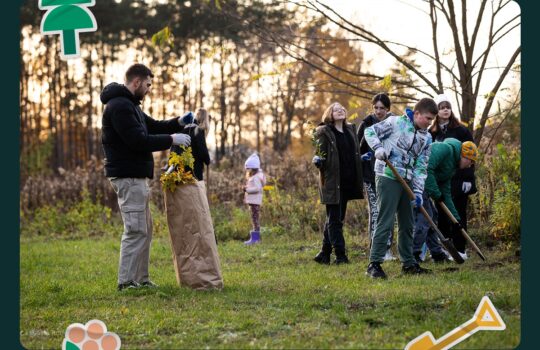
It is also important to engage in local initiatives that bring people closer to nature. Educational activities, tree planting, creating flower meadows or community gardens make nature stop being an abstraction and become part of shared space and everyday experience.
The One More Tree Foundation regularly carries out tree-planting actions, creates flower meadows and organises clean-ups of green areas. Participation in such initiatives is not only support for nature, but also direct contact with it and a great source of enjoyment.
Why does contact with nature matter in the long term?
If we want to build a more environmentally conscious society, we must start with experience rather than theory. Contact with nature shapes attitudes in a natural and long-term way, without the need for pressure or fear-based messaging.
Treating nature as a need rather than a luxury allows us to change how we think about the environment and our role in protecting it. This is the foundation on which responsibility, care and real actions for nature can be built, both locally and globally.
Related Articles
Categories
Recent Comments
Recent Posts
Tags
animal protection biodiversity climate change consumer's rights Consumerism CSR eco education ecological education ecology educational workshops electronics employee volunteering employer responsibility environment environmental protection event-cleaning event-education event-flowers event-trees event-volounteering event-volunteering flower meadow global warming labour law mental health natural environment nature phenology planting-event plants production process recycling respiratory ilnesses seasons smartphone smog spring Stellantis sustainability trash tree planting trees waste reduction waste segregation well-being