“If it’s so cold, where is climate change?” Why frost does not contradict global warming

“If it’s so cold, where is climate change?” Why frost does not contradict global warming
Why frost and a freezing Baltic Sea do not contradict global warming
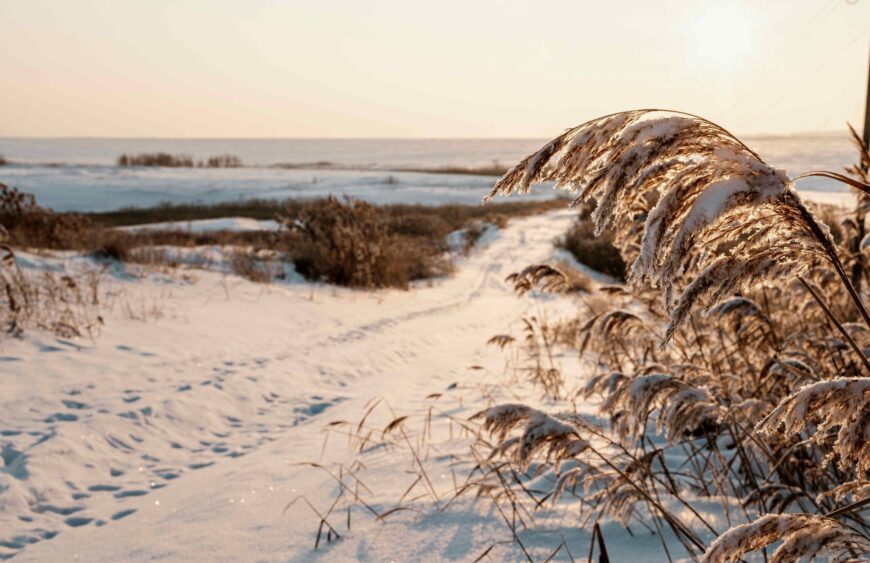
Every winter, when strong frosts, heavy snowfall or reports of the Baltic Sea freezing appear in Poland, the same question returns to public debate: if it is so cold, where is climate change? For many people, low temperatures seem like intuitive proof that global warming is exaggerated or does not exist at all. This is an understandable reaction, because in everyday life we rely on our own experiences and weather observations.
The problem is that this way of thinking greatly simplifies a very complex phenomenon. Climate change does not mean that everywhere and at all times it will simply become warmer. It primarily means a disruption of the climate balance we were accustomed to, and one of its most noticeable effects is increased weather variability. Cold winters, sudden frost waves or episodes of intense snowfall not only do not contradict climate change, but under certain conditions may actually be one of its consequences.
Weather and climate – a difference that changes everything
One of the key sources of misunderstanding is confusing weather with climate. Weather is the short-term state of the atmosphere at a given place and time, including temperature, precipitation, wind and cloud cover. Climate, on the other hand, describes average weather conditions observed over long periods, usually measured in decades.
This means that a single frosty winter or a few exceptionally cold weeks cannot undermine long-term climate trends. Just as one hot day is not proof of global warming, one very cold season does not disprove the fact that the Earth’s average temperature is rising. Climate is assessed on the basis of long-term data, not short-term deviations.
Why climate change does not mean “constant warmth”
In everyday understanding, global warming is often interpreted as a simple increase in temperature everywhere and at all times. In reality, climate change operates in a much more complex way. The warming of the planet affects atmospheric circulation, ocean currents and pressure systems that regulate the movement of air masses.
One of the key mechanisms is the jet stream, a strong band of winds high in the atmosphere that separates cold polar air masses from warmer southern air. As the Arctic warms, the temperature difference between the north and the south decreases, which can weaken and destabilise the jet stream. Under such conditions, cold air masses can more easily move southwards, causing sudden and intense cold spells in Europe, including Poland.
A freezing Baltic Sea – rarer than in the past
The freezing of the Baltic Sea is often cited as an argument against global warming. However, this phenomenon needs to be viewed in a broader historical context. Several decades ago, the Baltic Sea froze much more frequently and over a much larger area than it does today. In recent decades, a clear decline has been observed in both the frequency and the extent of ice cover.
The fact that the sea freezes in a given year does not mean that climate trends have reversed. It is a single weather event that fits into a pattern of increasing atmospheric instability. From a climate perspective, what matters is that such events are now the exception rather than the norm, and that the average duration and extent of Baltic ice cover are significantly smaller than in the second half of the twentieth century.
Why personal experience can be misleading
People naturally trust what they see and feel directly. Frost, snow and low temperatures are tangible and easy to remember, which makes them seem more convincing than abstract graphs or statistics. Our brains respond more strongly to vivid individual experiences than to long-term trends.
This is why short-term weather events are often used as arguments against climate change. Science, however, is based on the analysis of vast datasets collected worldwide over many decades. These data clearly show that despite local cold spells, the global warming trend is unmistakable.
What the data say, not emotions
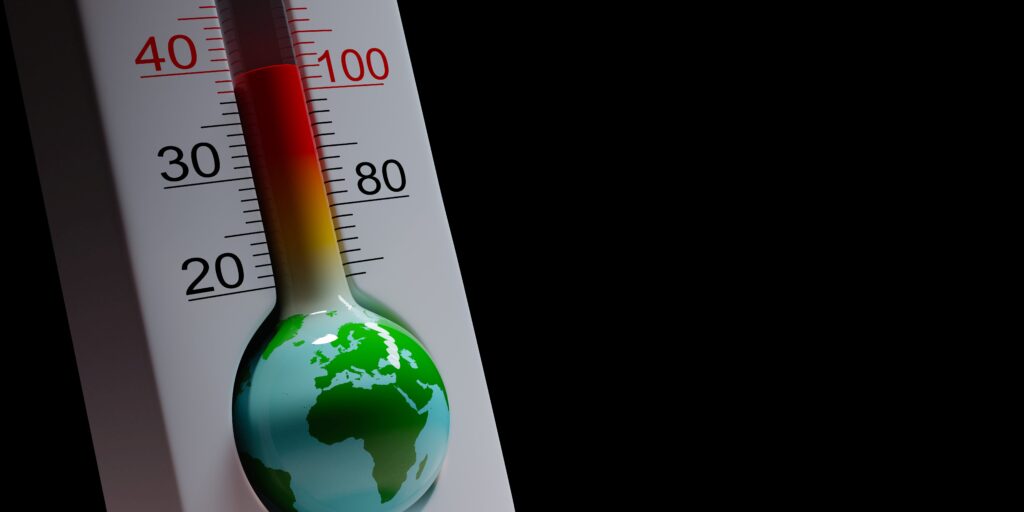
Measurements conducted since the mid-nineteenth century show that the Earth’s average surface temperature has already increased by about 1.1–1.2°C compared to the pre-industrial period. Although this figure may seem small, on a global scale it represents an enormous increase in the amount of energy stored in the atmosphere and oceans. Eight of the ten warmest years on record have occurred in the last decade, despite the presence of local cold periods.
In Europe, the rate of warming is even higher than the global average. The continent’s average temperature has already increased by about 2°C, and in Poland the average annual temperature is now approximately 1.5–2°C higher than in the mid-twentieth century. At the same time, the number of weather anomalies, both warm and cold, is increasing, confirming the growing instability of the climate system.
Oceans play a crucial role, absorbing more than 90 percent of the excess heat associated with global warming. Since the 1970s, the temperature of the upper layers of the oceans has been steadily rising, influencing ocean currents and atmospheric circulation. It is precisely these oceanic changes that allow local cooling events to occur alongside a global rise in temperature.

Why this matters for the fuure
These data have direct implications for the future, including in Poland. As average temperatures rise, the risk of extreme weather events increases. Climate projections indicate that by the middle of the twenty-first century, the number of heatwave days in Central Europe could double, while the risk of sudden and severe cold spells will remain.
This means higher costs for both the economy and society. Energy systems must cope with increasingly large fluctuations in demand, infrastructure designed for a stable climate becomes less resilient, and agriculture faces unpredictable growing seasons. Shorter periods of snow cover, more frequent thaws and sudden temperature drops increase the risk of losses in both natural ecosystems and economic activities.
Understanding that a cold winter in Poland does not contradict global warming allows us to move beyond emotional reactions and focus on long-term thinking. Climate change is not simply about whether a particular season is warm or cold, but about the growing instability of a system we once considered predictable. The sooner we incorporate these data into planning and decision-making, the better prepared we will be for a future in which weather stability can no longer be taken for granted.
Related Articles
Categories
Recent Comments
Recent Posts
Tags
animal protection biodiversity climate change consumer's rights Consumerism CSR eco education ecological education ecology educational workshops electronics employee volunteering employer responsibility environment environmental protection event-cleaning event-education event-flowers event-trees event-volounteering event-volunteering flower meadow global warming labour law mental health natural environment nature phenology planting-event plants production process recycling respiratory ilnesses seasons smartphone smog spring Stellantis sustainability trash tree planting trees waste reduction waste segregation well-being